Original Article · June 30, 2026
Shengxiong on AI
Hi everyone, I’m Shengxiong. A 35+ professional who transitioned from FMCG into hands-on AI practice, now focused on exploring “how AI can help ordinary people monetize quickly.” Follow me to stay updated on AI opportunities and practical AI side hustles.
A while ago, I took on an AI animated promotional video project.
The client placed an order for 2,400 yuan.
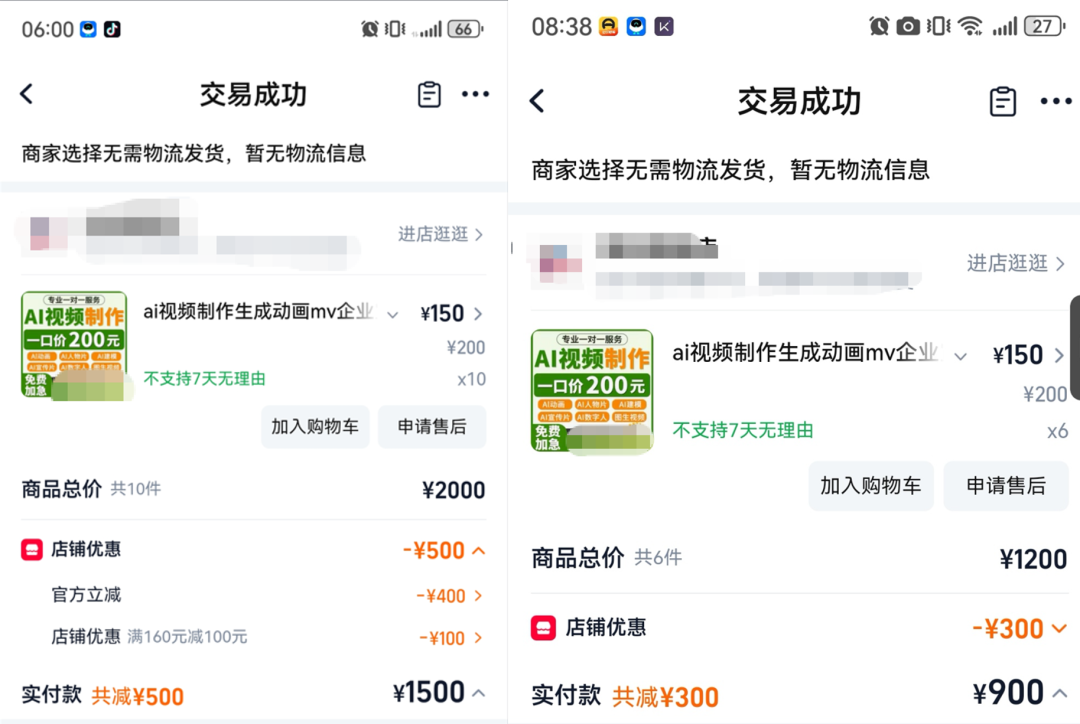
The video was required to be about 2 minutes and 10 seconds long.
Originally, I thought this would be a fairly routine AI video customization project.
Get the script.
Generate the visuals.
Create the animation.
Add voiceover and subtitles.
Deliver.
Based on past experience, I figured it wouldn’t be a problem.
But once I actually started working on it, I realized I had underestimated the project.
Full AI Video — MG Animation Style
I Underestimated This Project From the Start
The client sent me a safety education animation script.
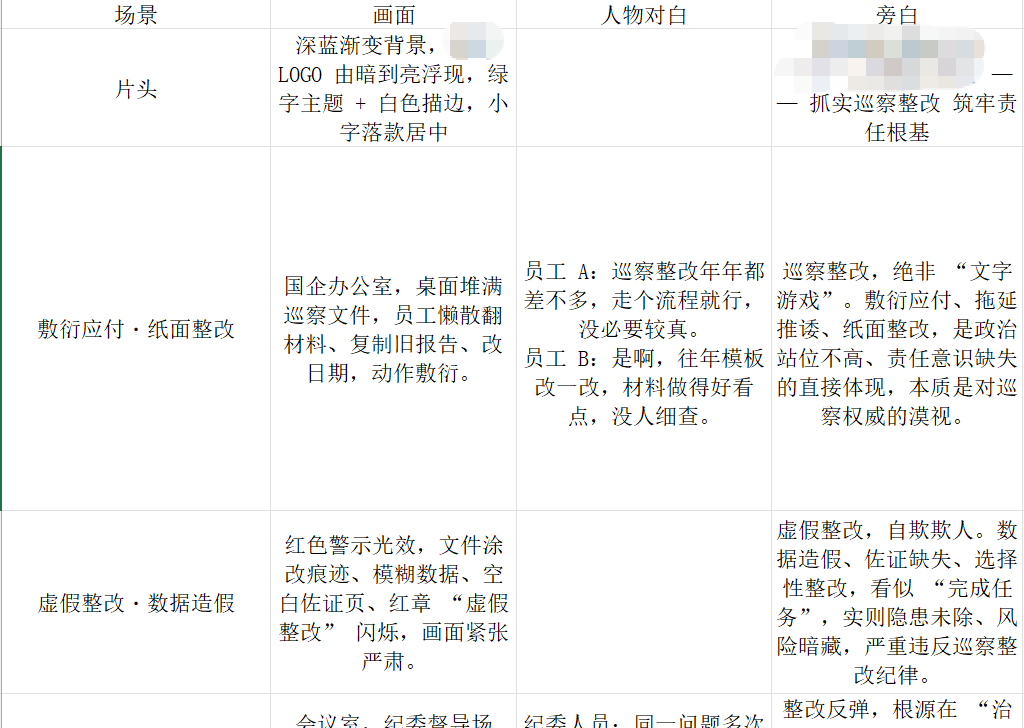
It didn’t look like much text.
But when it came to actual production, much of the content was highly abstract.
For example:
- Problems reoccurring after corrective actions
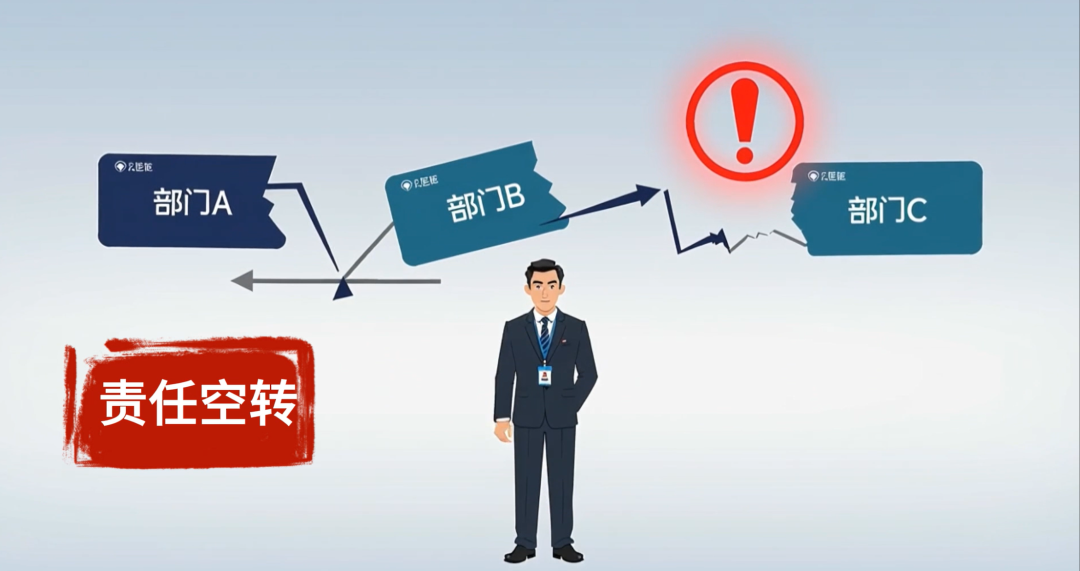
- Broken chains of responsibility
- Buck-passing at every level
- Closed-loop rectification and implementation
In the script, each of these was just one sentence.
But I needed to turn these abstract concepts into actual visual scenes, and I couldn’t figure out what they should look like no matter how long I thought about it.
Then I came up with an idea — I threw the script directly into AI and let it generate whatever visuals it wanted. Surprisingly, this approach yielded a pleasant surprise. The “broken chain of responsibility” segment in the promotional video was generated by AI in a single attempt. I looked at it and felt the effect was excellent, and the client was very satisfied too.
I Discovered for the First Time That AI Generation Isn’t the Hardest Part
Many people think the hardest part of AI video production is the software.
It’s actually not.
The真正 challenge is understanding what the client wants to express.
I remember there was a segment in the script that read:
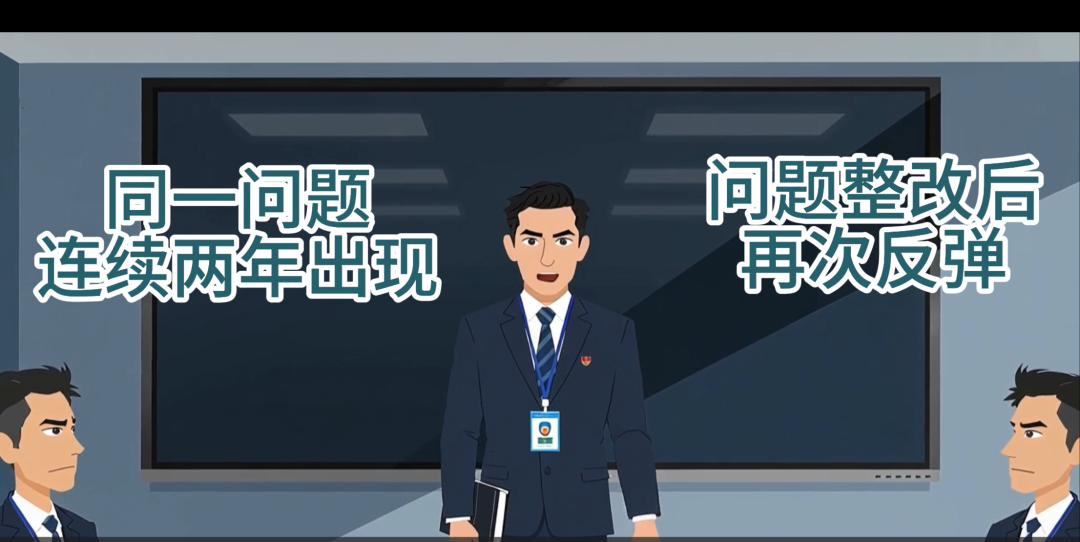
The same problem appeared for two consecutive years, recurring after being corrected.
I stared at the script for a long time.
How on earth was I supposed to visualize this?
Later, I could only keep confirming with the client:
What exactly does this scene mean?
What effect needs to be presented?
Can we represent this with charts or text?
Similar questions came up many times throughout the project.
Often, it wasn’t that I didn’t know how to do it.
It was that I didn’t dare make decisions on my own.
Because the client wanted accurate expression, not flashy techniques. Through communication, we finally confirmed that voiceover narration could represent this part.
The Most Nerve-Wracking Part Was Waiting for Leadership Review
When the project reached the midpoint.
The client sent me a message:
“The overall effect is fine. Let our leader take a look this afternoon, and then we’ll polish the details and it’ll be perfect.”

When I saw this message.
I didn’t feel any relief at all.
Instead, I felt even more nervous.
Because I knew.
What really determines whether a project gets approved isn’t the contact person.
It’s the review process behind them.
The first part, “overall effect is fine,” didn’t matter — what mattered was the second half: “polish the details.”
Anyone who has made AI videos knows that AI currently can’t generate content with complete freedom. Many modifications can’t be very precise — it’s like drawing cards from a gacha game.
So I could only silently pray that the “leadership” wouldn’t come up with unreasonable modification requests.
Even a Single Character Design Could Be Debated Repeatedly
That same evening.
New revision requests started coming in.
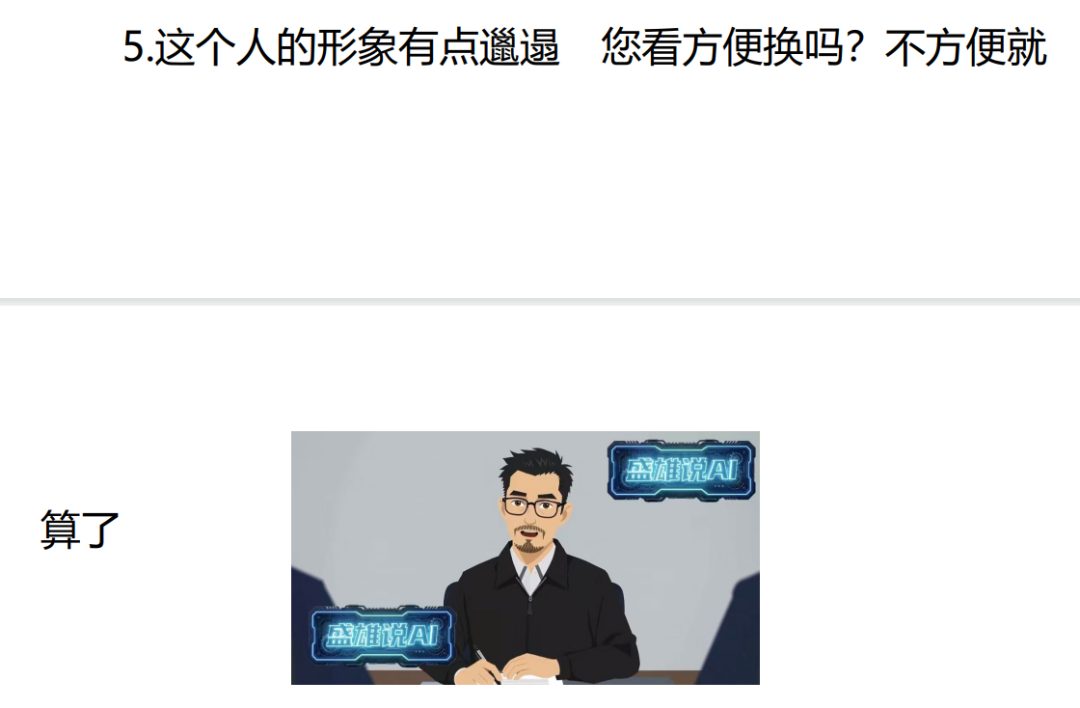
One character had a beard.
The leadership felt the image wasn’t positive enough.
It needed to be adjusted.

Then there was the voiceover pronunciation.
Subtitle positioning.
Text spacing.
Visual details.
They were all pointed out one by one.
Honestly.
If this were a regular client.
Many people probably wouldn’t even notice these details.
But this project made me realize:
Large state-owned enterprises have extremely high standards for content review.
Many seemingly insignificant details.
Were all seriously discussed.
Seriously revised.
It was also my first time learning that in a state-owned enterprise, having a beard could be seen as unkempt — even when the character was supposed to be a villain, someone being reprimanded for mistakes, they still had to maintain the glorious, positive image of the state-owned enterprise.
Getting Messages at 9 PM Surprised Me
During the project.
One detail left a particularly deep impression on me.
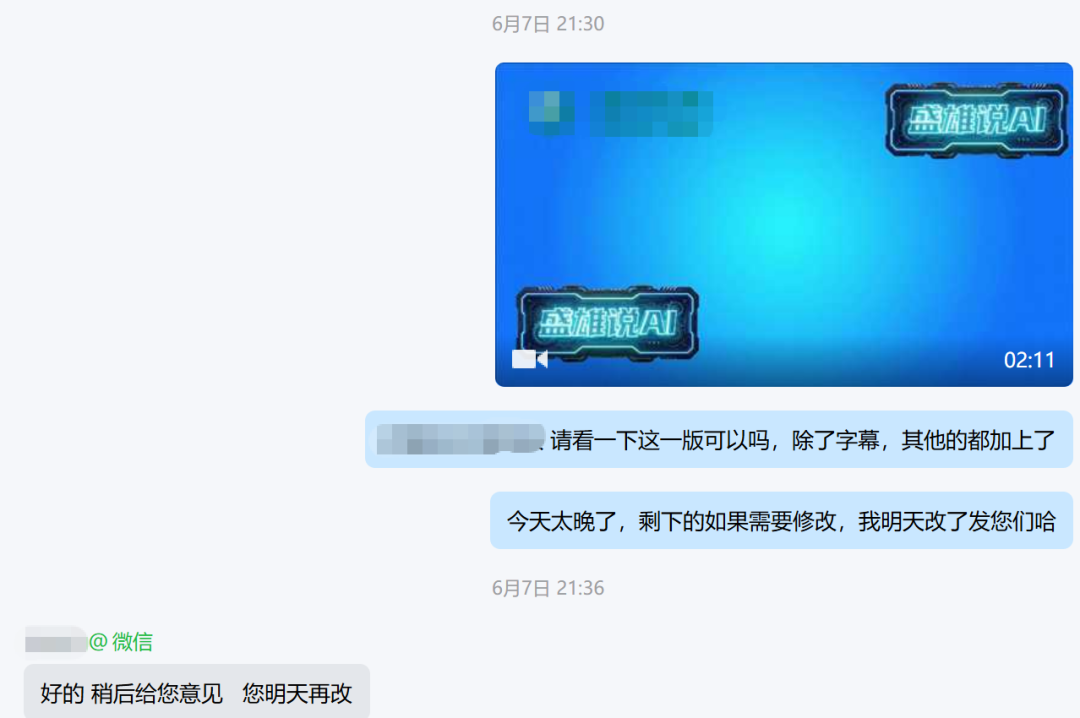
Based on the client’s requirements, by the time I finished revising the video that day, it was already past 9 PM.
I originally thought the review process would pause.
But messages kept coming in the enterprise WeChat group.
The client was replying.
The leadership was reviewing.
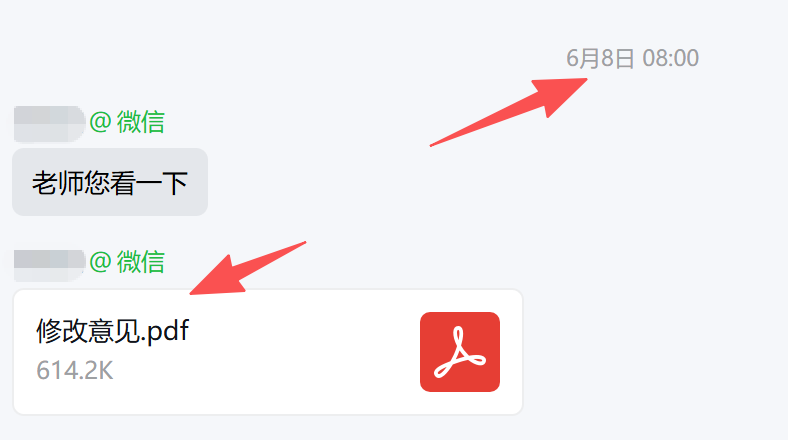
By 8 AM the next morning, a revision document of over a thousand words was already in my hands.
The entire project kept moving forward.
At that moment, I suddenly realized:
Many people’s impression of state-owned enterprises stops at “stable” and “easy.”
But after actually working with them, I discovered that many people in these positions work just as diligently.
And they handle work tasks even after hours.
They scrutinized this video meticulously, down to every detail.
So our stereotype of state-owned enterprises being relaxed with nothing to do really needs to change!
AI Can Improve Efficiency, But It Can’t Solve Delivery
This project was ultimately completed successfully.
Looking back and reflecting.
My biggest takeaway wasn’t really about how much money I earned.
But rather a deeper understanding of one thing:
AI can improve production efficiency.
But what truly creates value is never the tool itself.
It’s:
- Ability to understand requirements
- Project communication skills
- Revision and feedback handling
- Delivery management capabilities
Many people think AI video is just about entering a prompt.
Then clicking generate.
Only after actually taking on projects do you realize:
Generation is just the beginning.
Delivery is the real challenge.
To successfully close the AI monetization loop, beyond mastering AI tools, you need a deep understanding of traffic, sales, and marketing. Only then can you achieve twice the result with half the effort.
A Few Final Words
Recently.
I’ve been organizing my experience with AI video customization projects.
From the first small orders of a few dozen yuan.
To orders of several hundred yuan.
And now this 2,400 yuan project.
I’ve stumbled through quite a few pitfalls along the way.
And accumulated some real, practical experience.
If you also have AI short video production needs, feel free to add my WeChat: lsxcool. I will use a rigorous approach to create a video that satisfies you.
Additionally, I recently created an annual AI video customization mentorship community, providing consulting services for friends who want to close the AI video monetization loop.
Main offerings:
- ✅ Real AI video customization case studies
- ✅ Negotiation and pricing strategies
- ✅ Client acquisition channel sharing
- ✅ Project delivery details
- ✅ Group Q&A and discussion
- ✅ One-year ongoing mentorship
Recently, in a low-key manner, I welcomed my first member, and we just had a 1-on-1 video call to discuss relevant experiences.

Through nearly an hour of conversation, I realized that many people aren’t lacking in tool skills — AI tutorials are everywhere now, and knowing how to use AI isn’t worth much by itself.
What’s difficult is commercial thinking and closing the monetization loop. From acquiring traffic, to communicating with clients, to completing the final delivery — these are the foundational capabilities for ordinary people to close the commercial loop in the AI era. Once learned, they can be applied to other projects as well.
My next goal is simple:
Help him complete his very first AI video order as soon as possible.
If successful, I’ll document the entire process and share it with everyone.
Reflecting on my six-plus months of hands-on practice in the AI field, I’ve certainly taken my share of detours:
I produced 6 AI comic dramas, published 2, and only earned about 100 yuan in revenue share.
In AI programming, I won the Dark Horse Award at Baidu’s offline hackathon with a 1,000 yuan prize, and I built an AI image generation website that sold for a few hundred yuan — but together, it wasn’t much.
The reason I recommend AI video commissions as the top choice for beginners starting an AI side hustle is that this type of project has several advantages:
- It’s a non-standardized product, so you don’t need to worry about big companies competing. Individuals can get started fastest and most easily gain positive feedback.
- Video is a traffic gateway. By taking on AI video orders to build your skills, you not only master AI video capabilities but also build a channel for future traffic generation.
- It’s a complete commercial project — from requirement confirmation, to video production, to delivery verification. You can learn many communication and sales techniques that will help with future projects. It’s especially suitable for working professionals starting a side hustle.
- Pure online delivery with no geographic restrictions. I could do this in Shanghai before, and now I can do it in Guiyang, Yunnan, or even Tibet. You gain location freedom.
Of course, no project is perfect, and AI video customization is no exception.
- This is a time-for-money project — it’s an AI service with an obvious ceiling. Based on my conversations with industry friends, one person working full-time can earn about 20,000 yuan per month at most. If you’re like me and only do it occasionally, you’ll only earn a few thousand yuan. To scale up later, you’d need to form a studio.
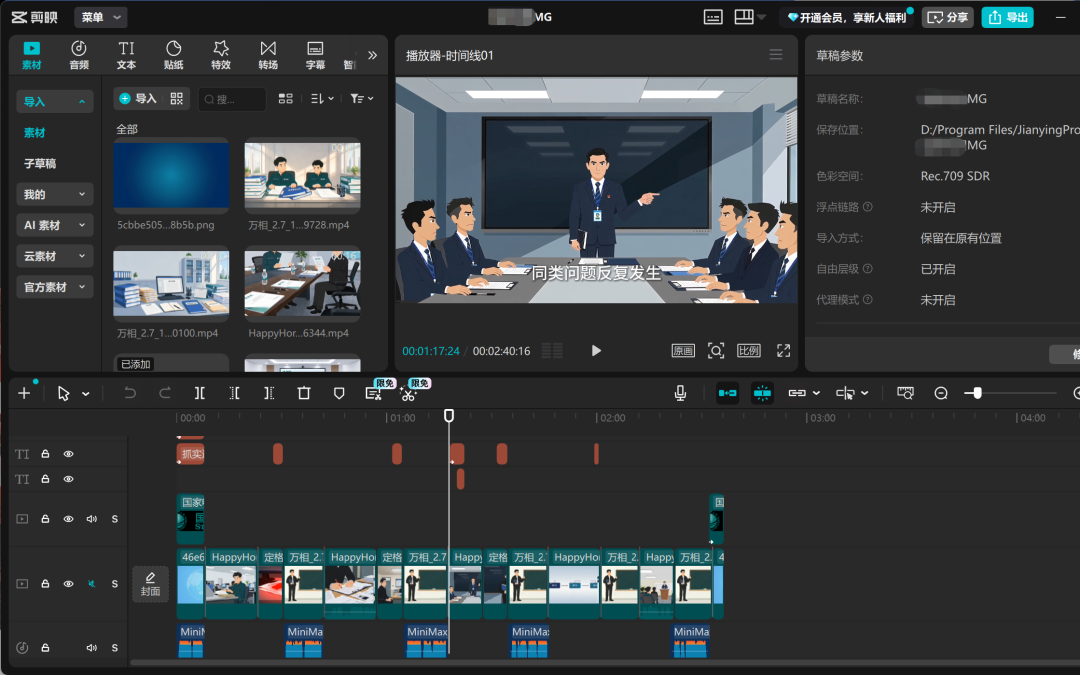
- You need to master the full AI video production pipeline. If you have no prior experience, there’s a steep learning curve for foundational skills, such as AI script generation, AI image generation, AI video generation, and editing.
- AI video generation still has limitations — it can’t achieve 100% freedom. Some precisely specified videos still can’t be produced.
But the pros outweigh the cons. I believe every project has its mission. Despite these shortcomings, AI video commissions can still serve as the top choice for ordinary people starting an AI side hustle. After all, there aren’t many projects that let you quickly close the monetization loop while building the capabilities needed for the future.
The mentorship community is currently in beta.
The price is tentatively set at 500 yuan/year — much lower than many single-month AI training programs on the market (typically priced at 1,999 or 2,999 yuan).
As the case library, delivery experience, and mentorship content continue to improve, the price will likely increase gradually.
If you’d like to learn about AI video customization, or want to learn about taking orders and delivery through real projects, feel free to scan the QR code to learn more.

I’m not a training institution.
Nor am I a course-selling instructor.
I’m just a 35+ former FMCG marketing professional who pivoted to the AI track six months ago — a hands-on practitioner exploring AI video and AI programming, someone who is continuously taking orders, stumbling through mistakes, and reflecting on the process.
If my experience happens to help you, you’re welcome to join me on this journey.
You’ve read all the way to the end — boss, please drop a like to show some support~